
.avif)
.avif)

.avif)
What is Polki Jewellery? Complete Guide | Raniwala 1881
What is Polki Jewellery? A Complete Guide to India’s Most Regal Bridal Tradition
By Raniwala 1881 | Heritage Polki Fine Jewellery, Jaipur
There is a moment every Indian bride knows. She opens a velvet box, and the light catches something that doesn’t glitter — it glows. Warm, deep, softly luminous, like candlelight trapped inside a stone. That is Polki.
And once you have seen it, no other jewellery quite compares.
For over a century, brides across India have chosen Polki jewellery not merely as an accessory, but as an heirloom — a piece of living history placed around their necks on the most important day of their lives.
At Raniwala 1881, we have been crafting that moment since the days of the Rajputana era. This is our guide to understanding what Polki jewellery truly is, why it holds such a sacred place in the Indian bridal tradition, and how to choose pieces worthy of being passed down for generations.
What is Polki Jewellery — in short: Polki jewellery is fine Indian bridal jewellery made using uncut, natural diamonds set in gold through the ancient Jadau technique. Unlike modern cut diamonds, Polki stones are left in their raw, organic form — giving each piece a soft, warm glow that is entirely its own.
What is Polki Jewellery? The Complete Answer
.avif)
Polki jewellery is made using uncut, natural diamonds — stones that have been mined, cleaned, and set exactly as they are found in the earth, without any cutting or shaping.
Unlike the brilliant-cut diamonds you see in modern solitaire rings, Polki diamonds retain their original flat, organic form. Each stone is entirely one of a kind.
This is precisely what gives Polki its signature glow. The flat surface of an uncut diamond reflects light differently from a faceted stone — softer, more diffused, more ancient-feeling.
It is a light that feels at home next to silk and zardozi, that belongs beside a red bridal lehenga or an ivory Benarasi saree. It does not compete with your bridal look. It completes it.
The Jadau Technique: How Polki Jewellery is Made
The diamonds in Polki jewellery are set using a traditional technique called Jadau — one of the most labour-intensive and revered jewellery-making arts in the world.
In the Jadau process, gold is heated until it becomes slightly malleable, and the stones are pressed directly into the metal while it is soft — held in place by the gold itself, not by claws or prongs.
This technique has remained virtually unchanged for over five hundred years. It is practised today by a dwindling group of master craftsmen, most of them based in Jaipur.
Polki Jewellery vs Kundan: What is the Difference?

Many brides ask about the difference between Polki and Kundan jewellery — and it is a fair question. Both are rooted in Rajasthani tradition, both use the Jadau setting technique, and both carry a similarly regal aesthetic.
The key difference lies in the stones:
• Kundan jewellery uses highly refined pure gold foil to set glass, paste stones, or semi-precious gems. It is gorgeous, more accessible in price, and extensively customisable in terms of colour.
• Polki jewellery uses real, uncut natural diamonds set directly in gold. This is what gives Polki its prestige — and its weight as a genuine heirloom investment.
A well-made Polki set does not simply look expensive — it is a genuine diamond piece, one that holds intrinsic value and deepens in significance with every generation it passes through.
Raniwala 1881: A Polki Heritage Born in Jaipur
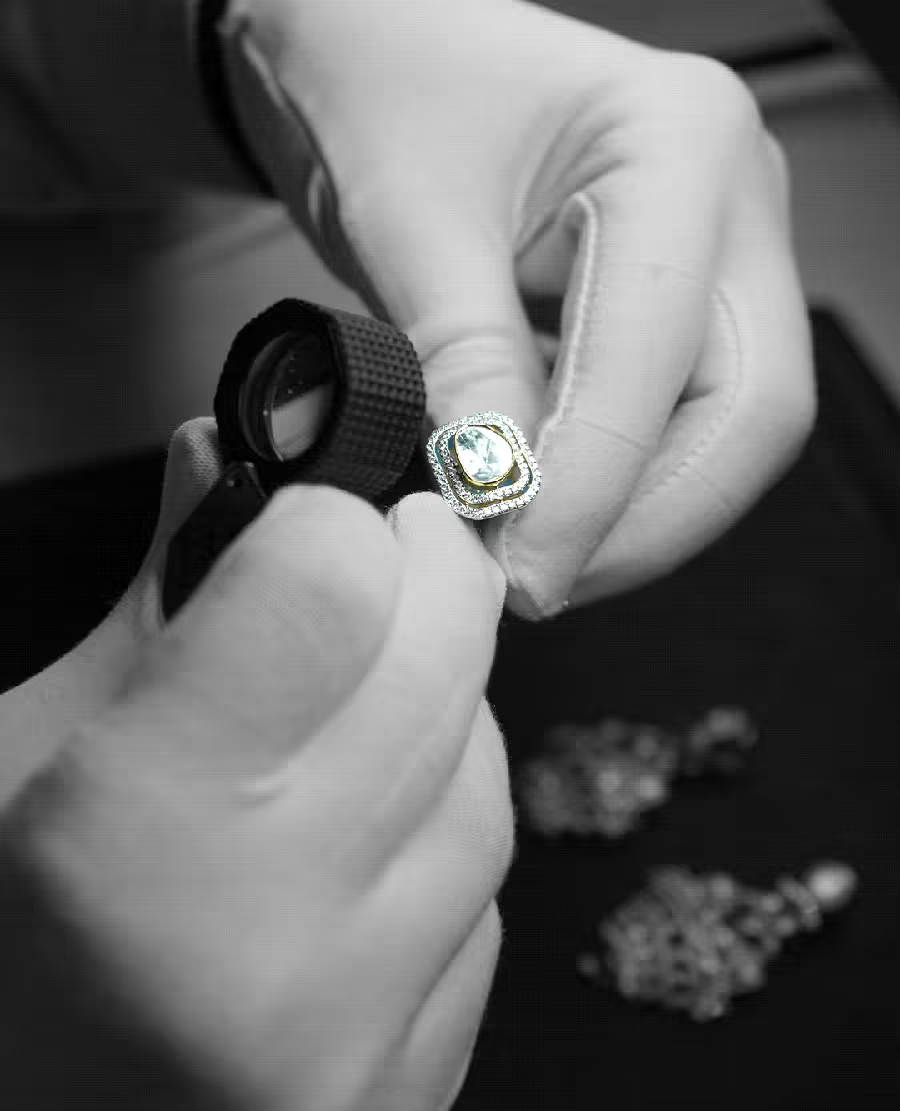
To understand Polki jewellery is to understand Jaipur. The Pink City has been the heartland of fine Indian jewellery for centuries — home to the royal ateliers of the Rajput courts and the workshops of craftsmen whose families have kept these traditions alive through changing empires and eras.
Raniwala 1881 was born into this legacy.
Our story begins in the 19th century with Rai Seth Champalalji Bahadur, honoured by the British Crown, whose family name became synonymous with the finest jewellery in Rajasthan. For over 143 years, every piece that has left our atelier has been the work of artisans who learned their craft the same way their fathers and grandfathers did — not from a textbook, but from the bench, watching, practising, perfecting.
Today, under the vision of co-founders Abhishek and Abhiyant Raniwala, that heritage continues to evolve. New collections like Aaina [LINK: https://www.raniwala1881.com/collections/aaina] and Raas [LINK: https://www.raniwala1881.com/collections/raas] speak to modern brides without abandoning the soul of the craft.
The uncut diamonds are still set by hand. The gold is still worked the old way. The difference is that the designs now hold a conversation between history and the present — as every truly great piece of jewellery should.
To explore the full story of how Jaipur became the beating heart of Polki craftsmanship, read our deep dive: Jaipur and the Art of Polki [LINK: https://www.raniwala1881.com/blogs/jaipur-and-the-art-of-polki]
→ Explore the Aaina Collection — Raniwala 1881’s latest bridal Polki offering [LINK: https://www.raniwala1881.com/collections/aaina]
Why Indian Brides Choose Polki Jewellery

The reasons brides choose Polki are as layered as the jewellery itself.
• It carries cultural weight. Polki has adorned the queens of Rajasthan, the heroines of Indian cinema, and the brides of countless families for whom jewellery is not fashion but inheritance. When you wear Polki on your wedding day, you connect yourself to that lineage.
• It photographs beautifully. The soft, natural glow of uncut diamonds captures warmth in photographs that sharply faceted stones sometimes cannot. Polki looks as breathtaking in your wedding album as it does in person — which is why celebrities from Alia Bhatt and Janhvi Kapoor to Kriti Sanon and Sobhita Dhulipala have chosen Raniwala 1881 pieces for their most photographed moments.
• It is a genuine investment. Because Polki uses real natural diamonds set in gold, a fine piece retains and often appreciates in value over time. It is one of the few luxury purchases you make for a wedding that you will never regret.
• It is irreplaceable. Because every Polki diamond is uncut and unique, no two pieces are ever exactly alike. Your Polki set belongs only to you.
→ Discover Raniwala Brides — real brides in our heritage Polki pieces [LINK: https://www.raniwala1881.com/brides]
How to Identify Real Polki Jewellery
With the rising popularity of Polki, the market has seen an influx of imitation pieces — glass, cubic zirconia, or synthetic diamonds presented as authentic. Here is how to protect yourself before you buy.
• Look for natural imperfections. Real Polki diamonds are uncut and unprocessed. Each stone carries subtle inclusions, slight colour variations, and an organic, asymmetric shape. If every stone in a set looks perfectly identical, they are almost certainly not genuine.
• Feel the weight. Real gold and genuine diamonds have a satisfying heft. Imitation pieces tend to feel noticeably lighter in the hand.
• Ask for provenance. A reputable jeweller will always tell you the origin of their diamonds and the purity of the gold used. At Raniwala 1881, every piece comes with the transparency of 143 years of craft heritage behind it.
• Check the setting. In authentic Jadau-set Polki, the gold appears to hold the stone from below and around, flush with the surface. Machine-set or glued imitations look noticeably different up close.
• Buy from heritage jewellers. The Jadau technique is extraordinarily difficult to execute well, and shortcuts show. Seek out jewellers whose craftsmen have been practising this art for generations — not seasons.
For a complete visual guide to spotting authentic Polki, read: The Truth About Polki — Recognising What is Real [LINK: https://www.raniwala1881.com/blogs/how-to-identify-real-polki-jewellery-a-complete-guide]
Caring for Your Polki Jewellery
Polki jewellery, like all fine things, rewards careful attention.
• Store each piece individually in a soft-lined box or pouch — never loose together where stones can scratch one another.
• Keep your Polki away from water, perfume, and chemical products.
• Clean it only with a soft, dry cloth.
• For deeper cleaning, bring it to a trusted jeweller rather than attempting it at home.
Most importantly — wear it.
Polki jewellery was made to catch the light, to be noticed, to tell a story. Kept in a box, it is simply an object. On you, it becomes an heirloom.
Begin Your Polki Jewellery Journey with Raniwala 1881
Whether you are a bride choosing your wedding set, or someone drawn to the beauty of India’s most storied jewellery tradition, Raniwala 1881 invites you to experience our collections.
Each piece in our atelier — from the ceremonial grandeur of Aaina to the lyrical beauty of Raas — is an invitation to wear history.
Visit us at our flagship atelier in Jaipur, or book a private appointment [LINK: https://www.raniwala1881.com/book-an-appointment] to begin your bridal jewellery journey with us.
Because some traditions deserve to be carried forward — one bride at a time.
Also Worth Reading
• The Truth About Polki — Recognising What is Real [LINK: https://www.raniwala1881.com/blogs/how-to-identify-real-polki-jewellery-a-complete-guide]
• Jaipur and the Art of Polki [LINK: https://www.raniwala1881.com/blogs/jaipur-and-the-art-of-polki]
• Explore the Aaina Collection — our latest bridal Polki offering [LINK: https://www.raniwala1881.com/collections/aaina]
• Discover Raniwala Brides — real brides in our heritage pieces [LINK: https://www.raniwala1881.com/brides]
• The World of Raniwala — our 143-year story [LINK: https://www.raniwala1881.com/world-of-raniwala]