


Jewellery Shopping in Jaipur in Its 300th Year: A Luxury Buyer's Guide
There is a difference between buying jewellery in Jaipur and choosing it here.
One happens at a counter. The other happens slowly, in a quiet room, with the people who know how a piece was made, and why.
Jaipur was laid out in 1727 around its bazaars, workshops and gem trade, and both ways of buying have lived side by side ever since. On 18 November 2026 the city enters its 300th year.
This is our guide to the second way: how luxury jewellery is chosen in Jaipur, and what to expect when you visit the Raniwala 1881 atelier.
In short
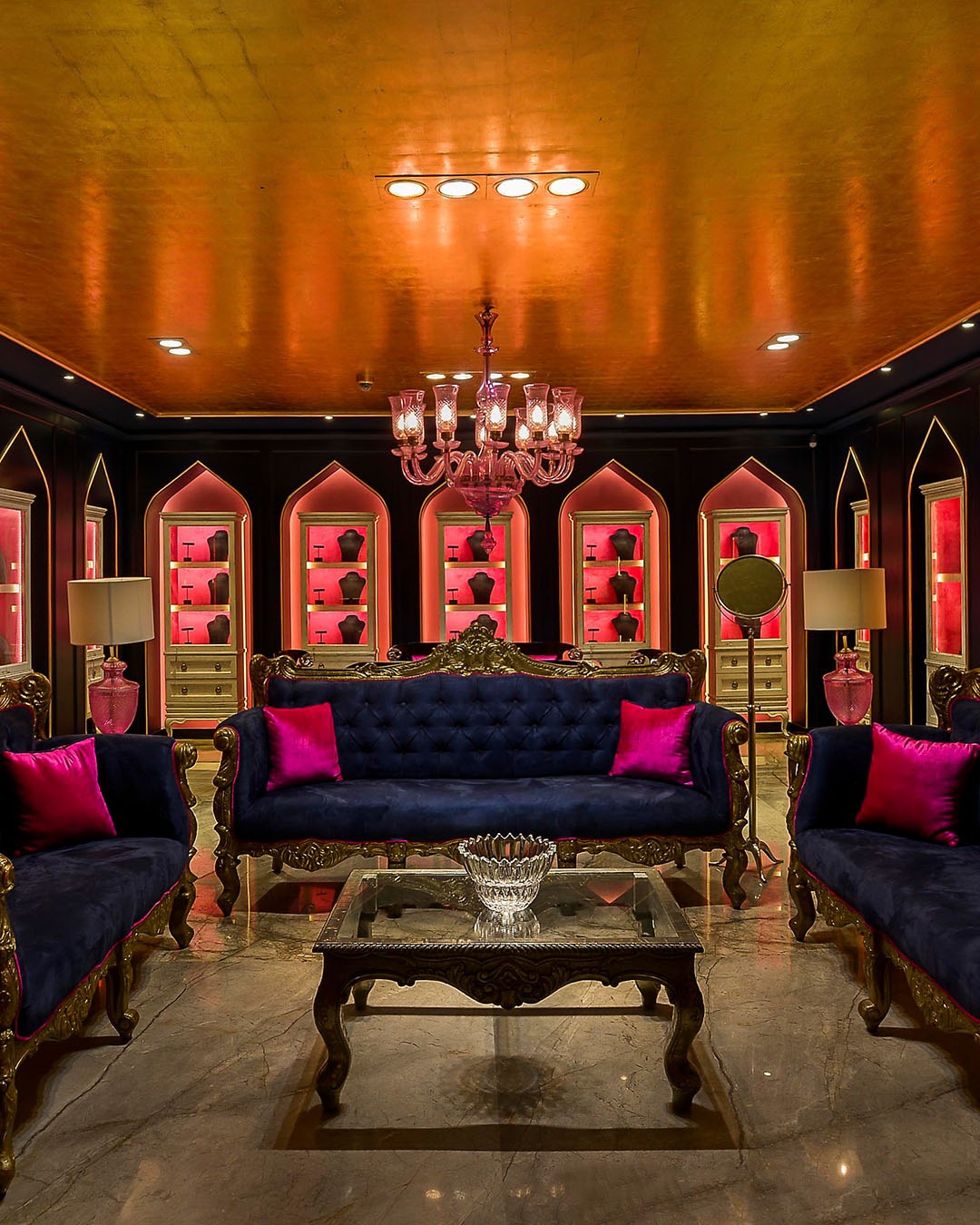
If you are looking for luxury bridal jewellery in Jaipur, consider visiting an established jewellery house where you can explore pieces privately, understand their craftsmanship and discuss bespoke commissions. At Raniwala 1881, a private appointment brings together personal guidance, handcrafted Polki jewellery and the opportunity to explore designs made in our Jaipur atelier.
Why Jaipur, in its 300th year
Jaipur has long held a distinctive place in India's jewellery-making tradition. Founded on 18 November 1727 by Sawai Jai Singh II, the city was planned as a commercial centre where trade, craftsmanship and urban life could flourish together.
Its walled city, recognised as a UNESCO World Heritage Site in 2019, reflects this relationship between commerce, architecture and craft. Jewellery-making became part of that wider artistic culture, alongside gemstone work, enamel work and other traditional crafts.
Today, Jaipur remains an important destination for Polki jewellery, jadau jewellery and traditional Indian bridal jewellery. The work continues through skilled karigars who shape gold, select stones and bring intricate designs to life by hand.
For anyone considering bridal jewellery shopping in Jaipur, this connection between the city and its crafts offers more than a choice of designs. It provides an opportunity to understand the techniques, people and traditions behind the pieces.
To explore this relationship in greater detail, read our guide to Jaipur and the Art of Polki.
![Pink and gerua facades of Jaipur's walled city, home of the city's jewellery trade]](https://cdn.prod.website-files.com/6793639c2215406583cf2a11/6ad1e2ef9f3958222a8ec235_43285c68.png)
For why the city holds such a place in the Polki tradition, read Jaipur and the Art of Polki.
Where luxury jewellery is chosen in Jaipur
Jaipur offers several ways to explore jewellery, from the busy markets of the walled city to established fine jewellery houses and specialist ateliers. The right choice depends on what you are looking for.
If you are exploring traditional designs, the markets offer an opportunity to experience the city's jewellery culture. If you are choosing an important bridal set, investing in fine Polki jewellery or considering a bespoke commission, a private appointment at an established jewellery house can offer a more considered experience.
You have time to compare pieces, understand the craftsmanship and discuss how a design will work with your wedding outfits. You can also ask about customisation, care and the services available after your purchase.
For us, the experience should extend beyond selecting a piece from a showcase. It should help you understand what you are choosing and why it suits you.
Inside the Raniwala 1881 atelier
It begins with a conversation
When you visit our atelier, we begin by understanding what brings you to us.
Are you choosing jewellery for your wedding, your reception or a family occasion? Have you already selected your outfits, or are you still exploring possibilities? Do you prefer a traditional bridal set, a distinctive Polki necklace or a piece that you can wear in different ways over the years?
These questions help us guide the selection.
Rather than presenting pieces without context, we consider the occasion, your personal preferences and the way you intend to wear the jewellery. The pieces we bring forward are chosen to make that conversation more meaningful.
Polki, made with natural uncut diamonds, has a distinctive appearance. Its appeal lies in the individual character of the stones and the way they interact with gold. Seeing a piece in person allows you to appreciate its surface, proportions, setting and finish more closely than a photograph can convey.
A private viewing gives each piece the attention it deserves.
The craft, explained
A piece of fine Indian jewellery carries the decisions of the people who made it. Understanding those decisions can change how you appreciate the finished design.
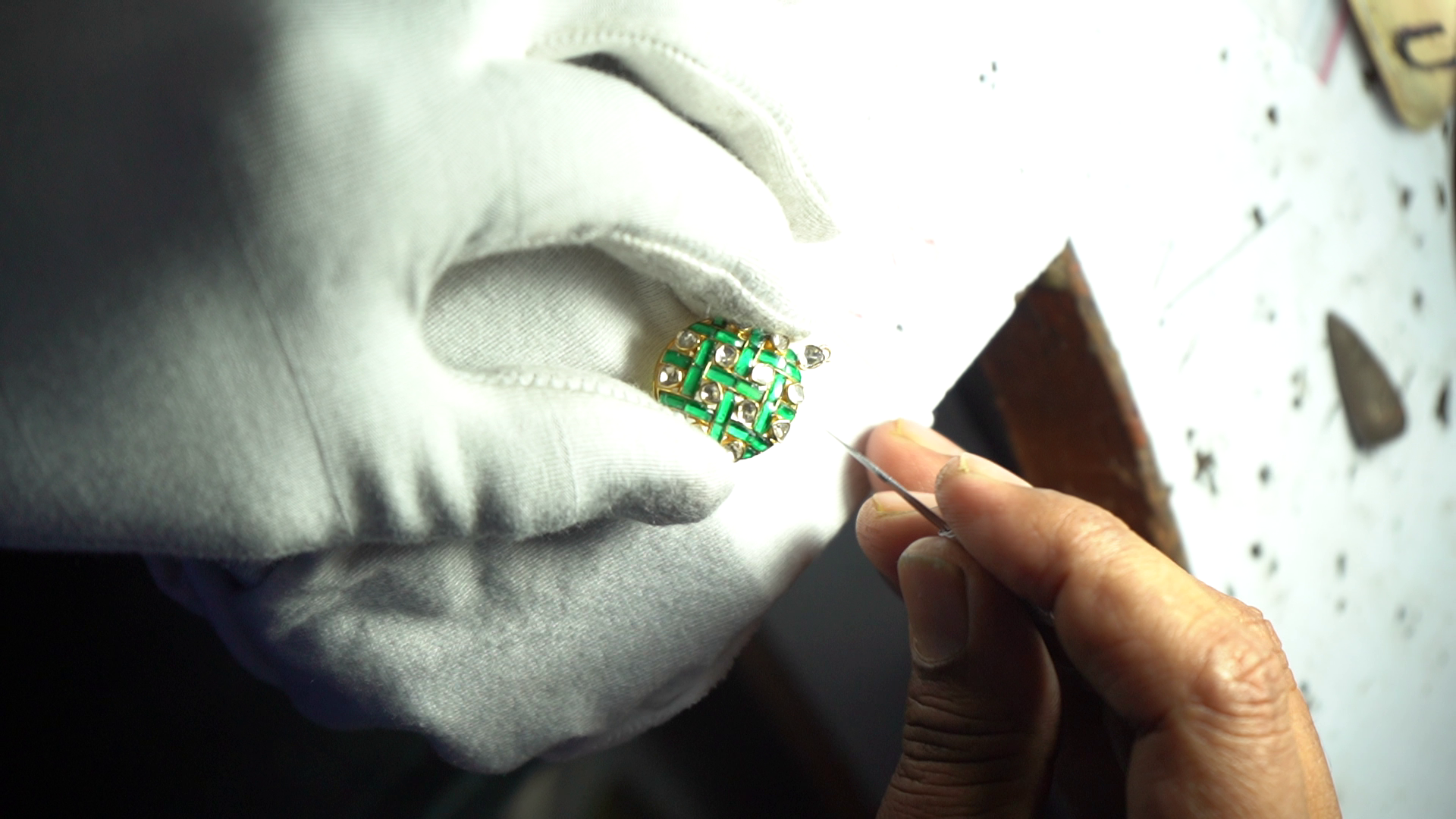
At Raniwala 1881, our jewellery brings together traditional techniques and contemporary design. Depending on the piece, the process may involve sketching, shaping gold, preparing settings, selecting stones and carefully placing them by hand.
Polki refers to natural, uncut diamonds. Jadau describes a traditional method of setting stones into gold, while kundan is associated with a refined gold-foil setting technique. These terms are related, but they do not mean the same thing.
Many traditional jadau pieces also feature meenakari, the art of decorating metal with coloured enamel. The reverse of a necklace or pendant can reveal details that are not immediately visible when the jewellery is worn.
During an appointment, our consultants can help you understand the materials, setting and craftsmanship of the piece you are considering. We want you to appreciate not only how the jewellery looks, but also how it has been made.
For a more detailed explanation, read our guide to Polki vs Kundan vs Jadau: The Real Difference.
Bespoke Jewellery, Made in Jaipur
Not every bride finds exactly what she has imagined in an existing collection. Sometimes the design needs a different proportion, a particular detail or a closer relationship with the outfit.
This is where bespoke jewellery becomes valuable.
At Raniwala 1881, clients can explore pieces from our collections or discuss a made-to-order design with our team. The process begins with a conversation and a sketch, followed by the work required to bring the design to life in our Jaipur atelier.
Traditional jadau jewellery requires considerable attention to detail, and the time involved depends on the design, materials and complexity of the piece. For wedding jewellery, we recommend planning well ahead of the occasion so that the design and making process can be discussed carefully.
We see bespoke work as a collaboration. The bride brings her preferences, the occasion and her own ideas; our team brings its understanding of design, materials and craftsmanship.
If you are beginning to plan your wedding jewellery, our complete guide to bridal jewellery sets can help you consider the pieces you may need across your celebrations.
Jewellery That Goes Beyond the Wedding Day
When choosing fine jewellery, We encourage clients to think beyond the occasion for which they are buying it.
A statement necklace may become part of a family celebration years later. A choker may be styled with a different neckline, while a necklace with the right proportions may be worn in an unconventional way.
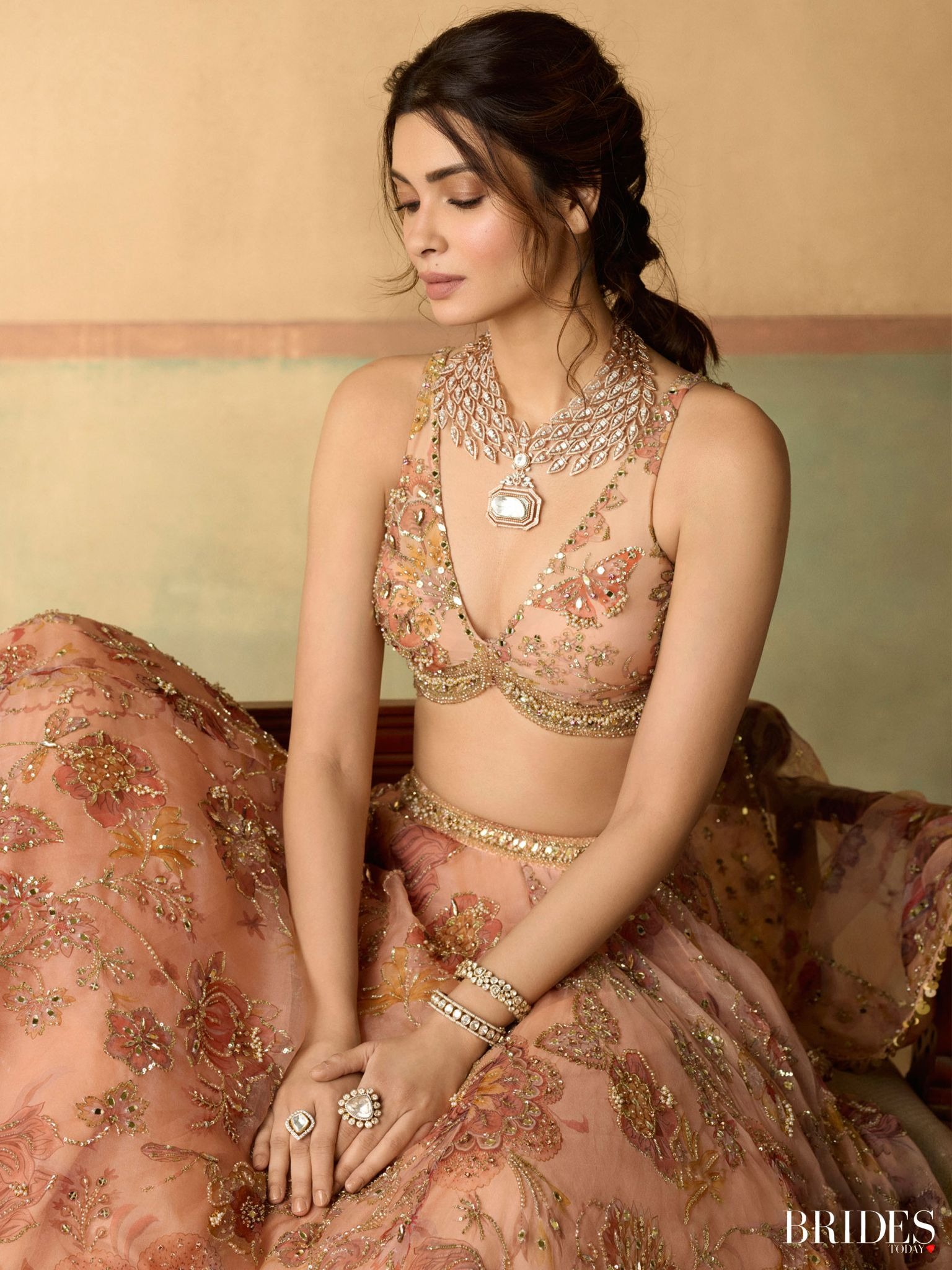
Diana Penty demonstrated this versatility when she wore our Regal Polki necklace as headgear for the Brides Today cover shoot. The piece took on a different role without losing its identity as jewellery.
For brides, versatility does not mean compromising on grandeur. It means considering how a piece might work with different outfits, occasions and stages of life.
Ask your consultant how the jewellery can be styled in more than one way, and whether its proportions and construction allow for alternative arrangements.
Explore more ideas in our guide to The Art of Versatility: Jewellery Beyond the Wedding Day.
Transparency, as a relationship
Fine jewellery is a considered purchase. The decision involves the design, the materials, the craftsmanship and the confidence you place in the house you choose.
At Raniwala 1881, we believe these conversations should be straightforward. Ask about the stones, the setting, the finish and the care your jewellery will require. Understand the details of the piece before making your decision.
We want our clients to leave with a clear understanding of their jewellery and the reasons they chose it.
For us, a relationship with a client does not end when a piece leaves the atelier. It continues through the occasions on which the jewellery is worn, the questions that arise over time and the care that helps preserve it.
Why Raniwala 1881
Our story is rooted in Rajasthan. It begins in the nineteenth century with Rai Bahadur Seth Champalal Raniwala of Beawar, whose appreciation of gems helped establish the family's association with fine jewellery.
Today, we continue that story from Jaipur, bringing together traditional Indian craftsmanship and contemporary design. At Raniwala 1881, we approach Polki and diamond jewellery with an appreciation for the techniques that have shaped the craft and the possibilities that lie ahead.
Our work has received recognition, including two honours at the JAS Jewellery Eminence Awards 2022: Polki Necklace of the Year and Heritage Necklace of the Year.
Raniwala 1881 jewellery has also featured on Diana Penty for Brides Today, while our heritage brooches and buttons were worn by Sawai Padmanabh Singh at the Met Gala 2026. Our pieces have been worn by personalities including Kareena Kapoor Khan, Tamannaah Bhatia and Rashmika Mandanna, alongside Shahid Kapoor, Sidharth Malhotra and other notable figures.
These appearances are part of our story, but they are not the only measure of our work. What matters to us is the thought behind each design, the skill involved in making it and the experience of the person who wears it.
Discover more on our Celebrities and Brides pages, or meet the founders.
The Jaipur Edit: the city, in our hands
Jaipur's influence on our work extends beyond its jewellery-making traditions. The city's architecture, colours, cultural life and sense of occasion continue to inform how we approach design.
To mark Jaipur's approaching 300th anniversary, we unveiled The Jaipur Edit in September 2026. The collection looks at Jaipur as a living design language rather than a collection of familiar monuments and symbols.
It unfolds across three chapters.
The Grand Hall draws inspiration from Jaipur's architectural spaces, their symmetry and the sense of ceremony they create.
Chaugan takes its energy from the movement, tradition and pageantry of royal polo.
Dusk explores the city after dark, from the warmth of gerua facades to the changing light and atmosphere of its evening gatherings.
Across the collection, we explore how the geometry of a jali, the rhythm of an arch and the balance of a facade can inform jewellery without simply reproducing architectural details.
For me, the connection is personal. Jaipur is not only where we work; it is part of how we see design. The Jaipur Edit reflects that relationship through pieces shaped by the city's character and the craft traditions that continue to thrive here.
The collection is available online and by private appointment at our Jaipur atelier and Delhi Experience Centre.
![Polki pieces from The Jaipur Edit by Raniwala 1881]](https://cdn.prod.website-files.com/6793639c2215406583cf2a11/6ad1e2ef9f3958222a8ec241_2ba7feeb.jpeg)
Visiting us
If you are travelling to Jaipur to choose bridal jewellery, we recommend arranging your appointment in advance. This gives our team an opportunity to understand what you are looking for and prepare for your visit.
It can help to bring photographs of your wedding outfits, details of your wedding dates and an idea of the pieces you want to explore. If you are considering bespoke jewellery, allow sufficient time to discuss the design and making process.
You do not need to have every decision made before arriving. Sometimes the most useful part of a private viewing is discovering which designs suit you once you see them in person.
You can book a private appointment at our Jaipur atelier or our Experience Centre in Delhi. If travelling is not convenient, our team can also begin the conversation through WhatsApp or a video consultation.
As Jaipur approaches 300 years, its jewellery traditions continue to find new expression. We invite you to experience them at Raniwala 1881, where choosing a piece is as considered as the craft behind it.
Frequently asked questions
Where can I buy luxury jewellery in Jaipur?
You can explore luxury jewellery at established fine jewellery houses, specialist ateliers and bridal jewellery stores across Jaipur. If you are considering fine Polki jewellery, a bridal set or a bespoke commission, a private appointment can give you time to examine the craftsmanship, discuss customisation and understand the services available after purchase. Raniwala 1881 welcomes clients by appointment at its Jaipur atelier.
Is Jaipur a good destination for bridal jewellery shopping?
Yes. Jaipur has a long association with Polki, jadau and other forms of traditional Indian jewellery. Brides can explore a range of styles, from heritage-inspired bridal sets to contemporary designs. At Raniwala 1881, you can view collections privately or discuss made-to-order jewellery for your wedding.
What happens during a private jewellery appointment at Raniwala 1881?
The appointment begins with a conversation about your occasion, outfits and design preferences. Our consultants help you explore relevant pieces, understand their materials and craftsmanship, and discuss styling or customisation where available. If you are considering a bespoke design, you can also discuss the process and estimated timeline.
Can I get bespoke Polki jewellery made in Jaipur?
Yes. Raniwala 1881 offers the opportunity to discuss made-to-order jewellery through its Jaipur atelier. The process begins with a design conversation and sketch, followed by the work needed to create the piece. Timelines vary according to the design and complexity, so it is advisable to plan well ahead of your wedding.
How early should I buy my bridal jewellery?
The ideal timeline depends on whether you are selecting an existing piece or commissioning a bespoke design. If you are planning custom jadau jewellery, allow additional time for design development and handcrafting. We recommend discussing your wedding date with your consultant as early as possible.
What is the difference between Polki, Kundan and Jadau jewellery?
Polki refers to natural, uncut diamonds. Kundan is associated with a traditional gold-foil setting technique, while jadau refers to a traditional method of setting stones into gold. The terms are related within Indian jewellery traditions, but they describe different aspects of the craft. Read our detailed guide to Polki vs Kundan vs Jadau.
Can I visit Raniwala 1881 if I am not travelling to Jaipur?
Yes. You can visit our Experience Centre in Delhi or begin your consultation remotely through WhatsApp or video call. Our collections can also be explored on the Raniwala 1881 website.
When does Jaipur celebrate its 300th anniversary?
Jaipur was founded on 18 November 1727 by Sawai Jai Singh II. Its 300th anniversary falls on 18 November 2027. The city enters its 300th year on 18 November 2026.
About the author
Abhiyant Raniwala is Co-Founder of Raniwala 1881, the Jaipur fine jewellery house established in 1881. His work brings together the house's jewellery-making traditions, contemporary design and a close connection to Jaipur's artistic culture. Through Raniwala 1881, he continues to contribute to the evolution of Indian fine jewellery while upholding the craftsmanship and attention to detail that define the house.