


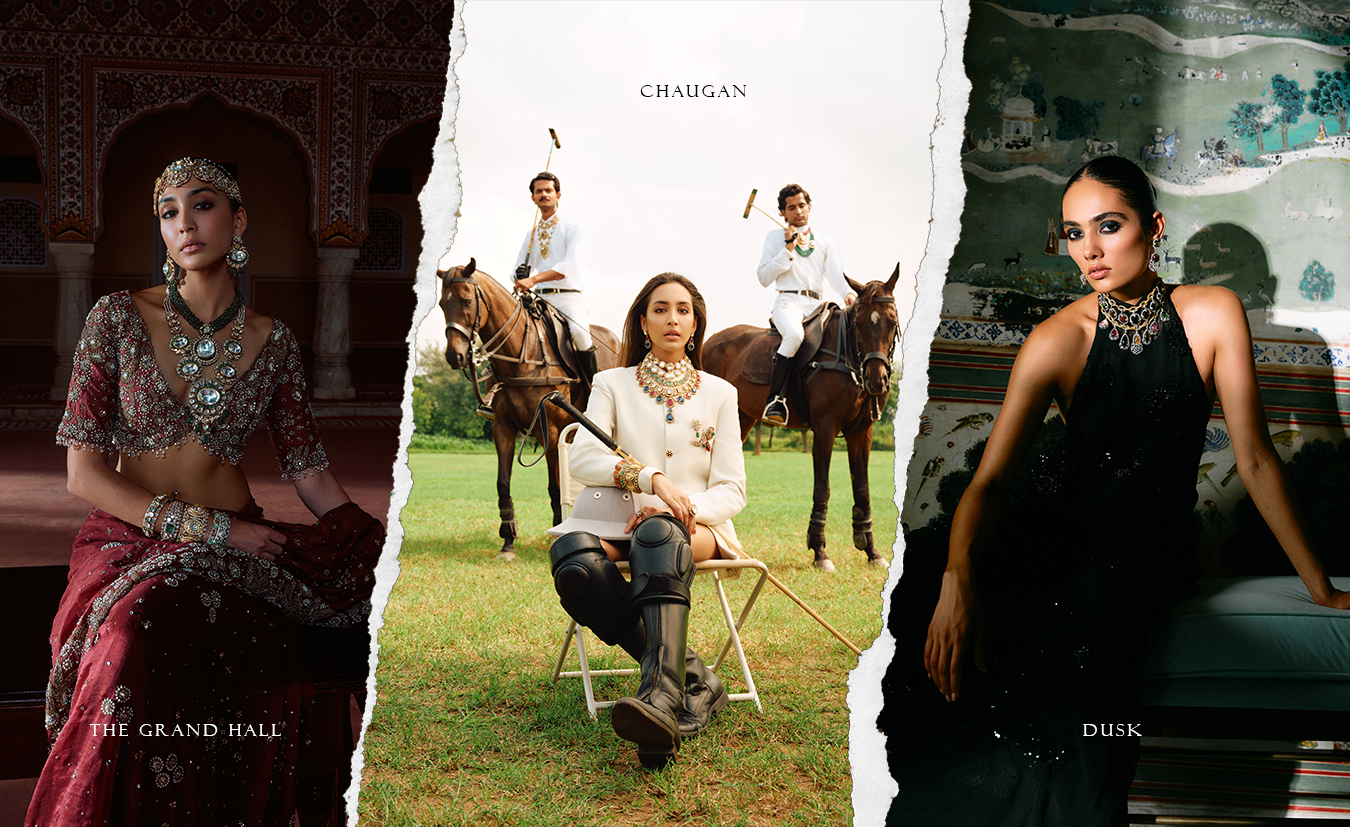
The Jaipur Edit by Raniwala 1881: A Tribute to the Pink City
The Jaipur Edit by Raniwala 1881: A Tribute to the Pink City
Most tributes to Jaipur begin with its monuments. Ours begins somewhere quieter: in the life that happens between them.
In its courtyards, on its royal polo grounds and through its shadowed evenings, this city has long mastered the art of the occasion.
As the Pink City approaches three hundred years, we wanted to honour that side of it: the moments it was built for, and the ones it still creates every single day.
This is the story of The Jaipur Edit by Raniwala 1881: where it began, what it draws from, and how an entire city became a collection.
In short
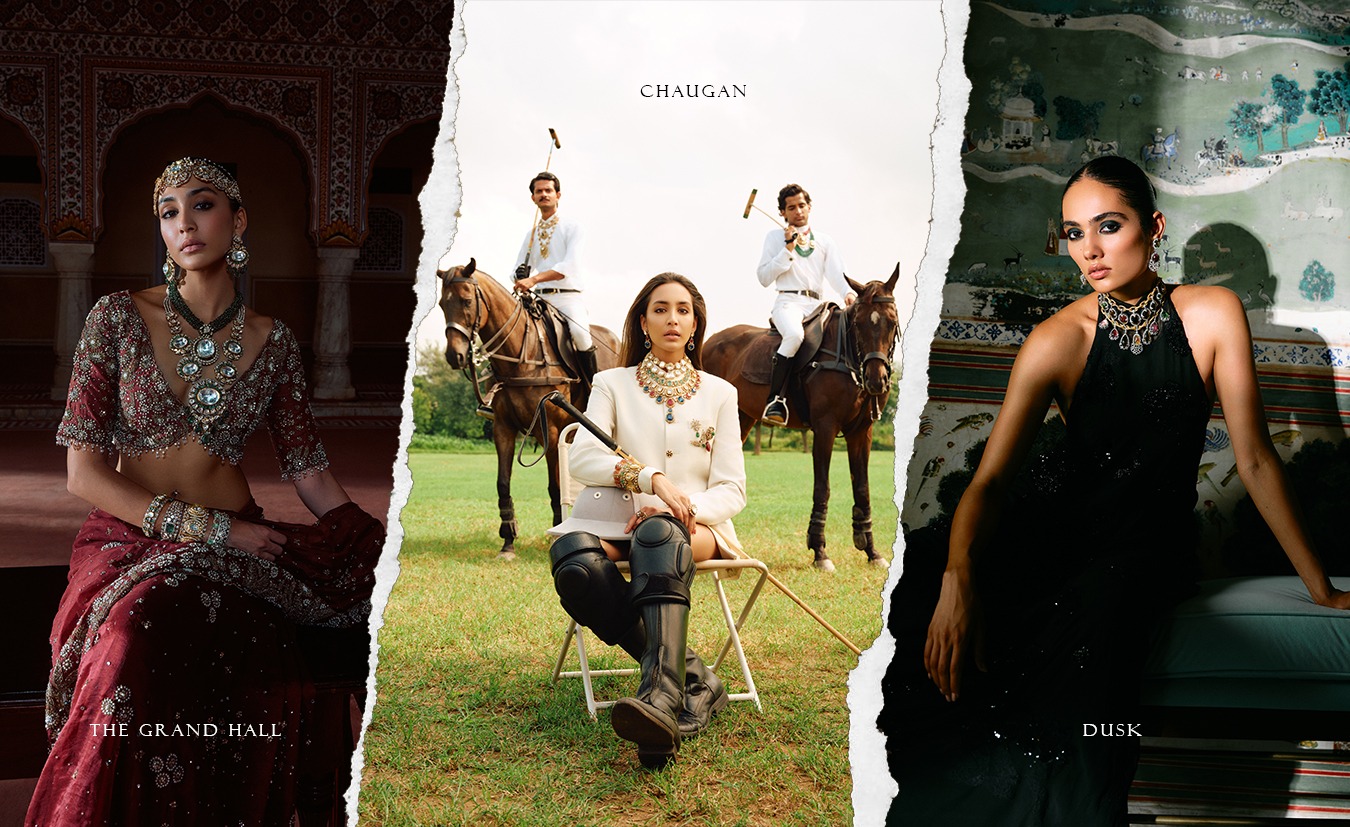
The Jaipur Edit by Raniwala 1881 is a Polki Jewellery Collection created to mark 300 years of Jaipur. It is our tribute to the city, told in three chapters drawn from Jaipur itself: The Grand Hall, Chaugan and Dusk. Here is the story behind each chapter.
300 years of Jaipur: a city imagined before it was built
When Maharaja Sawai Jai Singh II founded Jaipur in 1727, he imagined a city of remarkable order, with streets drawn on a grid, grand gateways and courtyards opening one into the next towards the palace.
For nearly three centuries, the city has kept that order and filled it with life: its rituals, its art, its celebrations.
In 2019, UNESCO inscribed Jaipur’s walled city as a World Heritage Site, recognising the plan behind it.
Jaipur was built as a city of makers rooted in Rajasthan, and it has never stopped being one. It is still one of the world’s great centres for cutting coloured gemstones, and Polki and Jadau are still set by hand in its workshops, including ours, adhering to the cultural legacy.
As we mark 300 years milestone of Jaipur, we at Raniwala 1881 wanted to give something back to the city we call home. The Jaipur Edit is our tribute to it.
For the city’s full story, see our guide to 300 years of Jaipur.
Looking closer: How The Jaipur Edit reads the city
We did not want to simply recreate the city’s familiar symbols.
Every piece in The Jaipur Edit begins with something we see in Jaipur every day. The geometry of a jali. The rhythm of arches down a colonnaded street. Light moving across a courtyard. The hush of a terrace as the sun goes down.
Most people walk past these details. We stopped to look.
We translate those details into Polki, hand-set in the Jadau tradition at our atelier. And because jewellery outlives the moment it is made for, we design each piece to be inherited, chosen and one day passed on.
In February 2026, we presented the Bejewelled Rani Ratna Angrakha, a garment set with about 840 grams of gold and silver, where pachi work, Jadau, Polki, meenakari and coloured gemstones came together on one surface.
Pieces like that remind us how much Jaipur’s crafts can still achieve side by side.
For more on the craft itself, see Jaipur and the Art of Polki.
The Jaipur Edit unfolds in three chapters
We tell The Jaipur Edit in three chapters, each drawn from the spirit of Jaipur showcasing a different side of the city rather than a single landmark. Together, they move from grandeur to celebration to stillness.
The Grand Hall
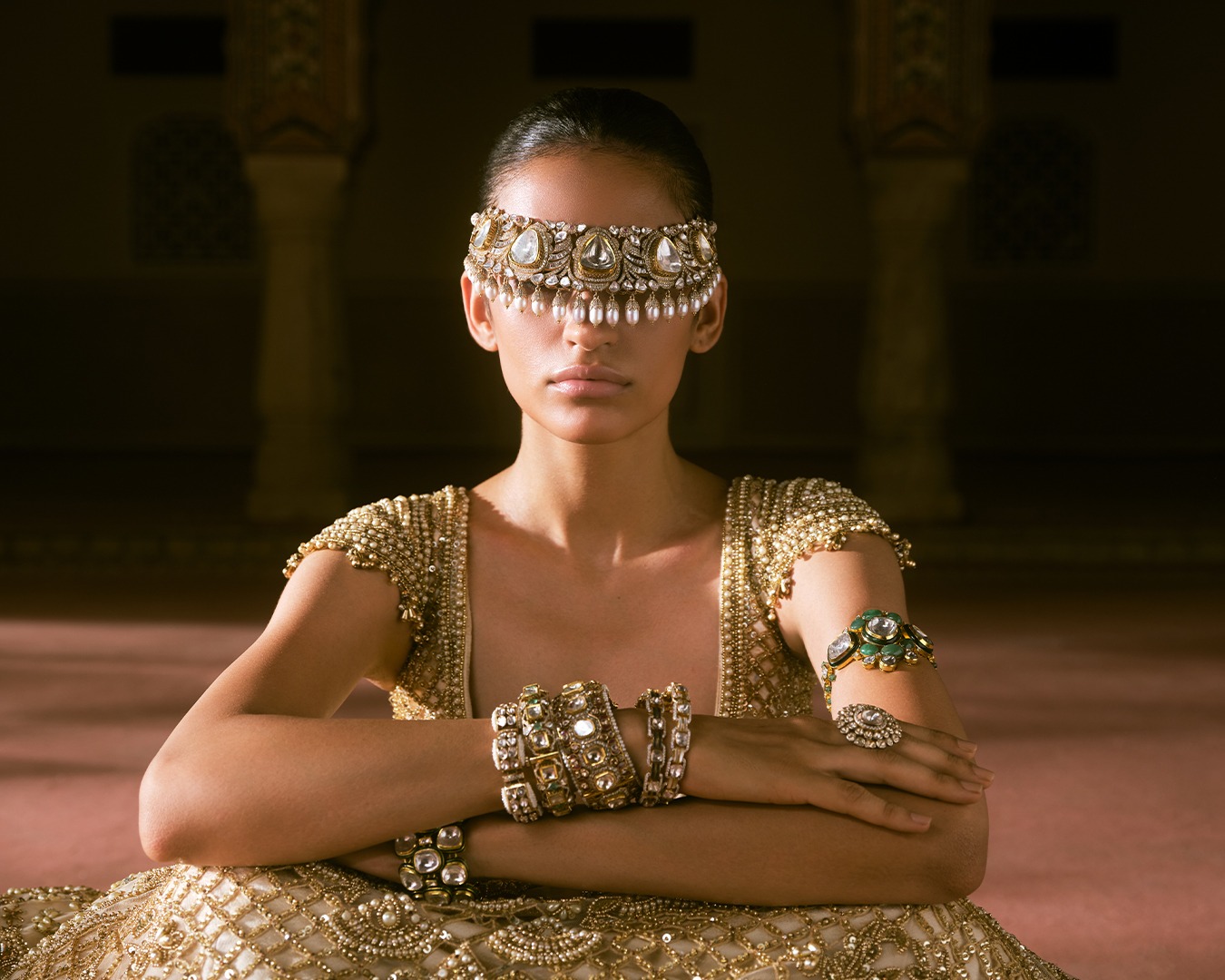
The Grand Hall comes from Jaipur’s courtyards, jalis and jharokhas, where scale and symmetry carry the weight of tradition.
Light falls through carved stone in patterns, and every arch answers the one across from it.
In the collection, that order becomes Polki choker sets and statement necklaces built on symmetry, each stone placed to balance the next. They are pieces with presence, made to be noticed across a room and studied up close.
Chaugan
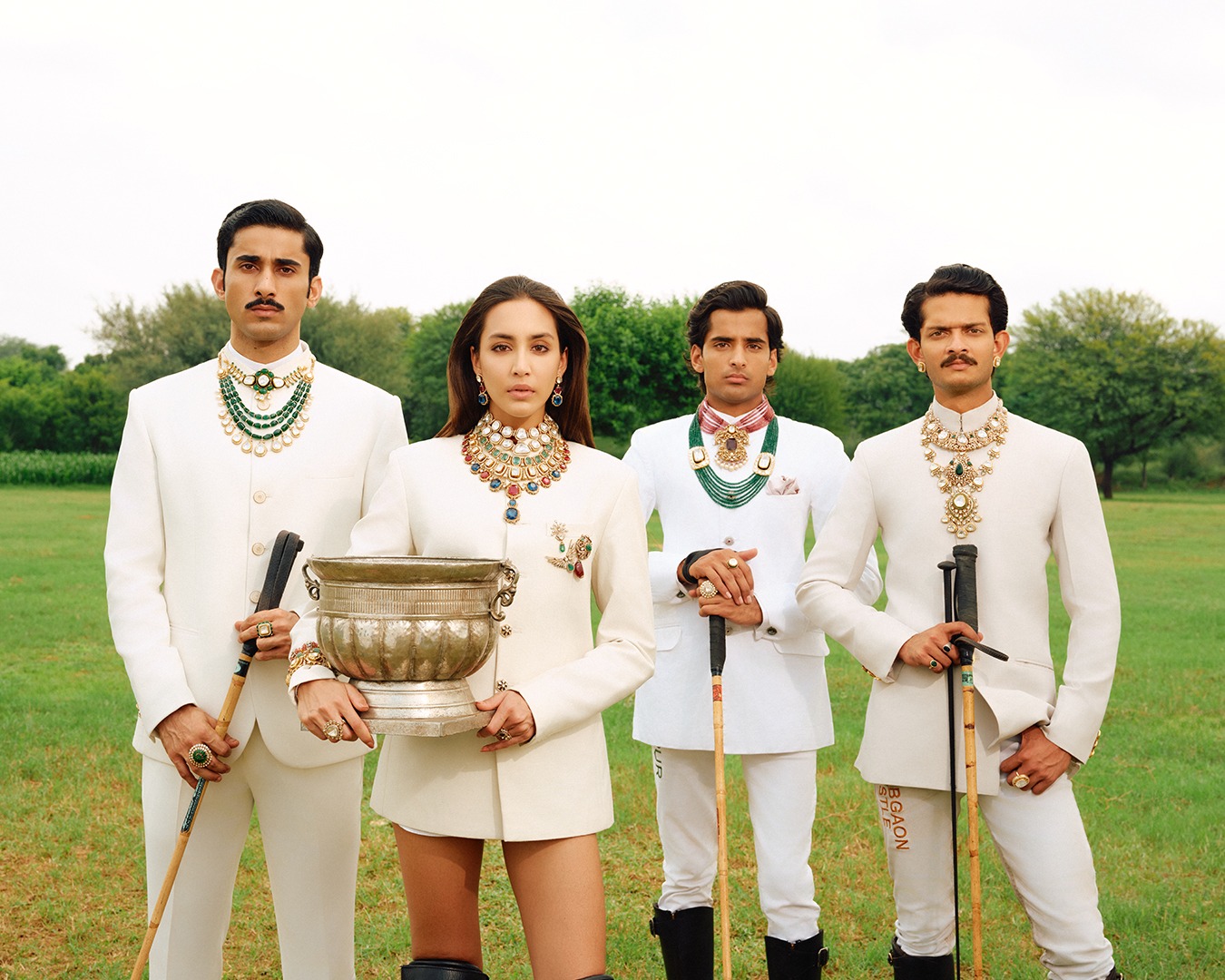
Chaugan takes its name from the royal city’s polo traditions, an old game of horse, stick and ball from which polo grew.
In Jaipur, polo was never only a sport. It was pace, pageantry and a whole city turning out to watch.
Its pieces carry that movement, with Polki chandbali earrings and lighter designs that sway as you move. They are made for long days of greeting, laughing and celebrating, when jewellery should move with you rather than sit still.
Dusk
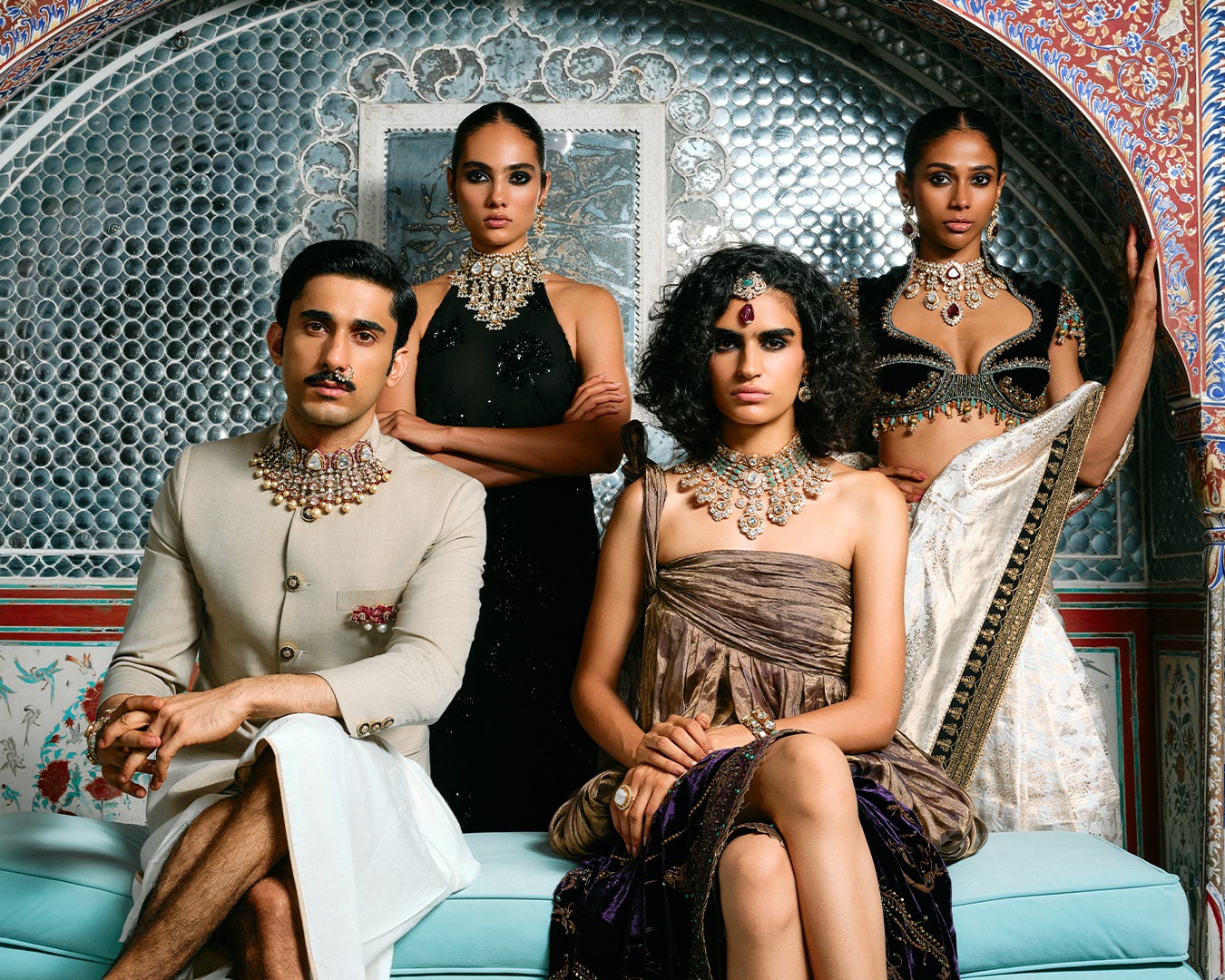
Dusk turns to Jaipur’s evenings: fading light on gerua façades, the earthy ochre-red of the old city, and long shadows on quiet terraces.
It is the hour when the city slows down and the noise of the day gives way to something more intimate.
In Polki, it becomes colour, led by an emerald Polki necklace. The idea is restraint: one piece with depth, worn with quieter earrings, so that nothing competes with it.
Dusk is our quietest chapter, and perhaps our most personal.
The full collection, across all three chapters, is now on view.
A portrait of 300 years of Jaipur
Together, the three chapters form a portrait of Jaipur that is less about its landmarks and more about how it feels to live here: its grandeur and its stillness, its rituals and its celebrations, its light and the quiet that follows.
Jaipur has given us more than inspiration. It has given us our craft.
At this milestone, The Jaipur Edit is our way of saying thank you, with pieces made to be worn now and handed on long after.
See The Jaipur Edit up close
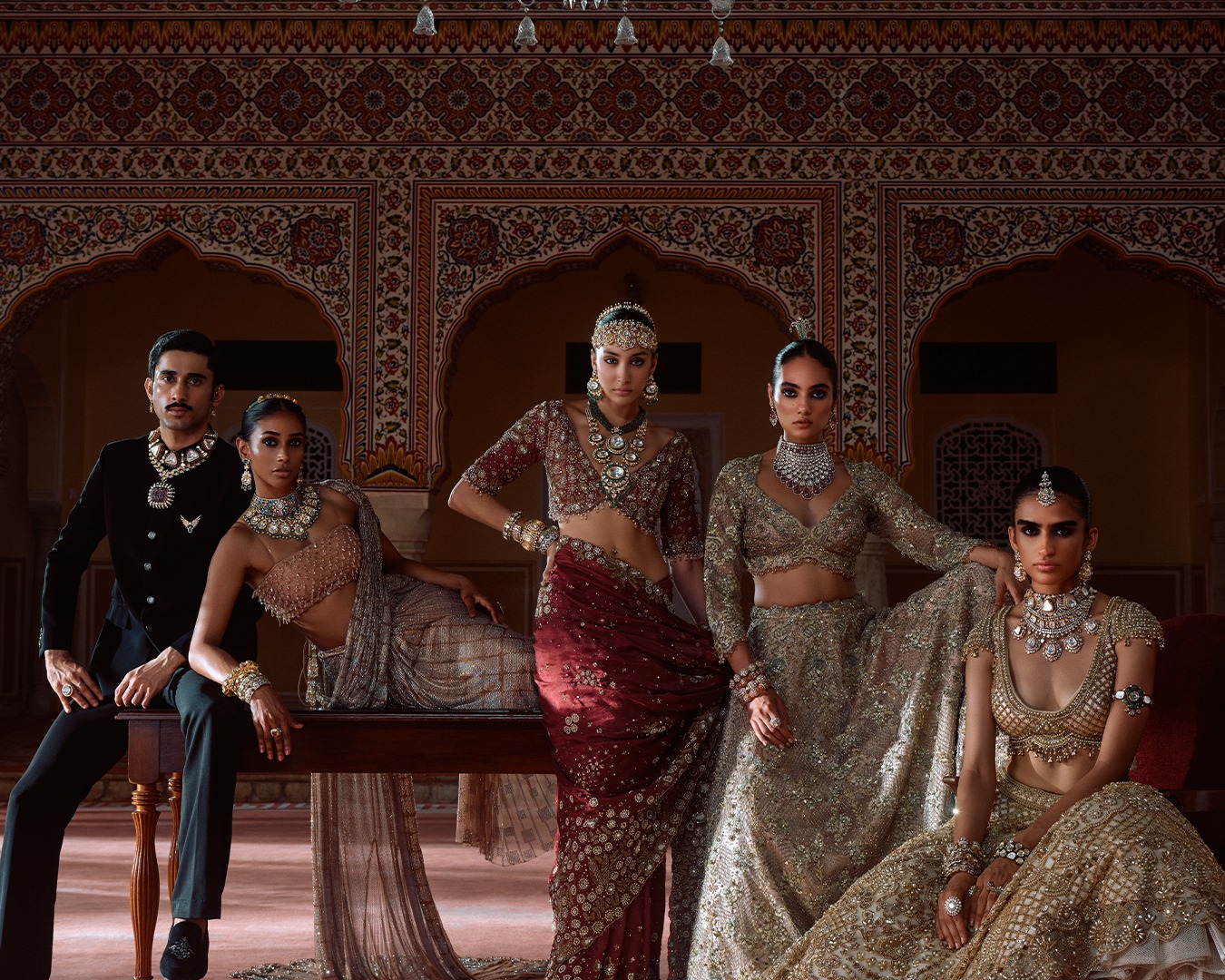
Polki is best understood up close: the stones, the hand setting, the way a piece settles when it is worn.
The Jaipur Edit may be viewed online or through a private video consultation. We also invite you to a private appointment at our atelier on Hawa Sadak in Jaipur, or at our Experience Centre in Delhi. Each piece is offered on a price-on-request basis.
For why we chose to mark this moment with a collection, read why we made The Jaipur Edit for 300 years of Jaipur.
It would be our honour to welcome you.
Frequently asked questions
What is The Jaipur Edit by Raniwala 1881?
The Jaipur Edit is our Polki collection at Raniwala 1881, made for 300 years of Jaipur. Its three chapters, The Grand Hall, Chaugan and Dusk, follow the city from its palace courtyards to its polo grounds and its evenings.
What inspired The Jaipur Edit?
Jaipur itself. We took our cues from the city’s palace architecture, its royal sporting life and its evenings, rather than from its best-known landmarks.
How is The Jaipur Edit connected to 300 years of Jaipur?
Jaipur was founded in 1727 by Maharaja Sawai Jai Singh II and enters its 300th year on 18 November 2026. We created The Jaipur Edit to honour 300 years of Jaipur and the craft the city has kept alive.
What does Chaugan mean?
Chaugan is an old horseback game played with a stick and ball, and the forerunner of modern polo. Jaipur’s royal family has long been linked with polo, and the walled city’s Chaugan Stadium still carries the name. In The Jaipur Edit, Chaugan stands for movement and celebration.
What is Polki jewellery?
Polki is jewellery made with uncut, unpolished diamonds, kept close to their natural form rather than faceted for sparkle. The stones are usually set in gold using the jadau technique, which gives Polki its soft, warm glow. Jaipur is one of India’s best-known centres for Polki craftsmanship.
What is Jadau?
Jadau is a traditional technique of setting stones into gold by hand, without prongs. The karigar heats the gold, presses each stone into it and secures it with fine layers of pure gold foil. Pieces are set one stone at a time, which is why no two Jadau pieces are exactly alike.
Why is Jaipur called the Pink City?
In 1876, Jaipur’s old city was painted a terracotta pink to welcome the Prince of Wales, and the colour has been kept ever since. The walled city’s façades are still maintained in that shade, which is why Jaipur is known around the world as the Pink City.
How do I care for Polki jewellery?
Store each piece separately in a soft pouch or lined box so the stones do not scratch one another. Keep it away from perfume, water and lotions, and put it on last when dressing. Wipe it gently with a soft, dry cloth after wearing, and bring it to us for a check before any repair.
Can I buy The Jaipur Edit online?
Yes. The full collection can be viewed on our website, and our team will guide you through any piece by private video consultation. Prices are shared on request.
About the author
Abhishek Raniwala is Co-Founder of Raniwala 1881, a Jaipur luxury jewellery house that traces its lineage to his great-great-grandfather, Rai Bahadur Champalal of Beawar. He leads our design, and the house is known for Polki set in 18-karat gold, with past work alongside designers including Sabyasachi Mukherjee, Manish Malhotra and Rahul Mishra. The Jaipur Edit is his tribute to 300 years of Jaipur, the city that continues to shape everything we make. Meet the founders.